I set off this past weekend to Big Sur, California, with one goal in mind --
to photograph McWay Falls. The weather report was good, and with a
high-pressure system off the California coast, that meant no fog, of which
Big Sur is notorious.
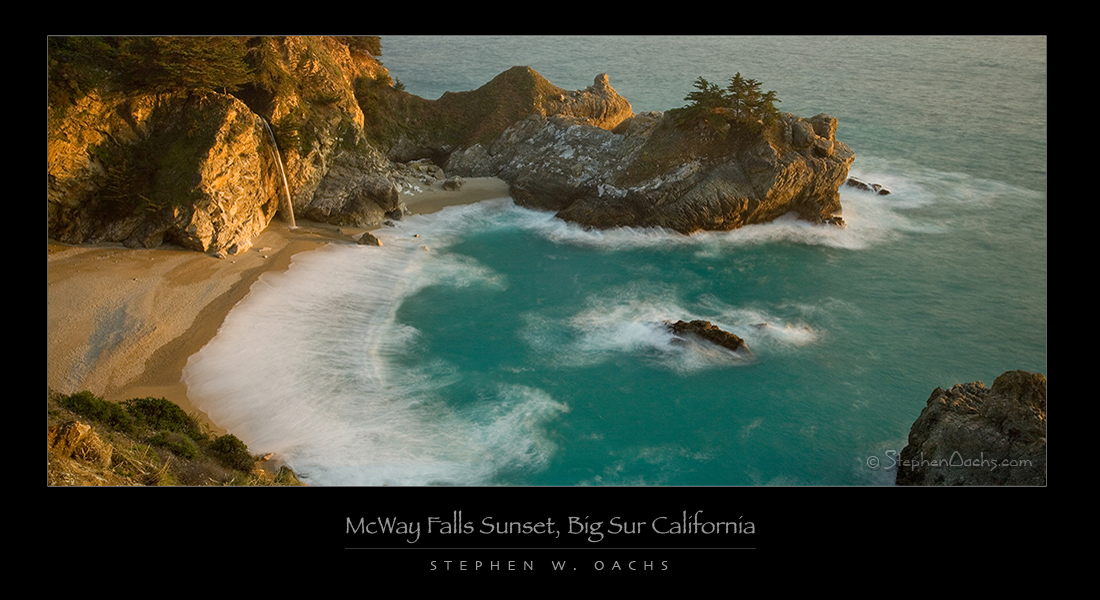
McWay Creek is extraordinary. It drops 80 feet into a small cove and spills
onto a pristine beach below it. The beach is not publicly accessible...at
least, not to humans. This was evident, because when I first arrived at the
falls, I could clearly see animal tracks in the sand below.
I spent the first afternoon and evening scouting the location and taking
test shots to get a feel for which angles I felt would best represent this
amazing place.
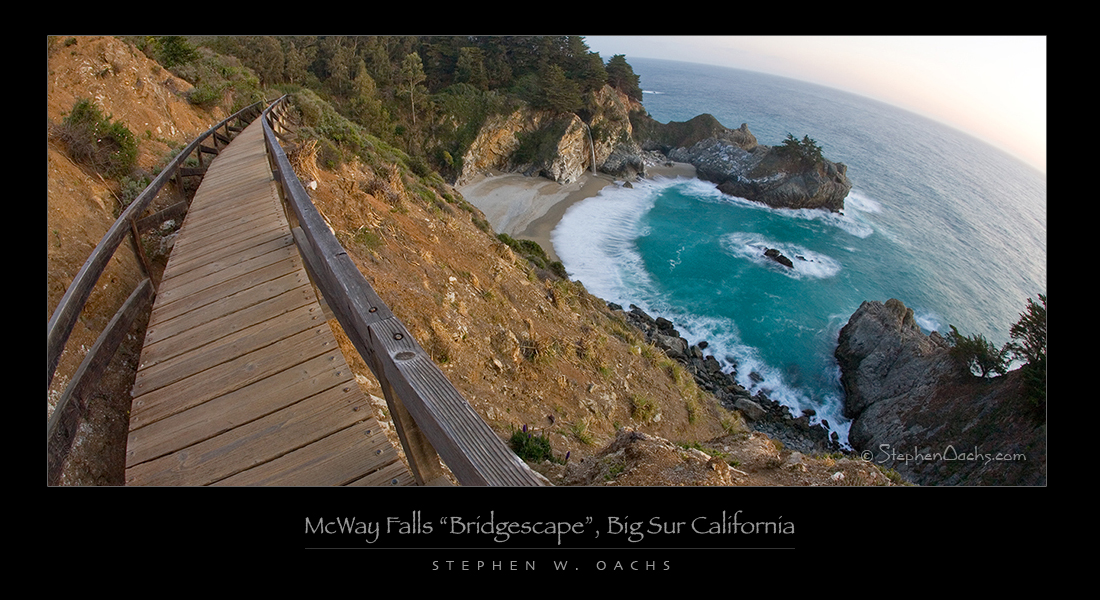
I took the first shot with a Canon 15mm f/2.8 fisheye lens, which is not an
"everyday"-type lens, but is a lot of fun. As you can see, it allowed me to
capture my path across the footbridge, with McWay Falls and the sunset in
the distance.
As the sun approached the horizon, the light became warm and illuminated the
cove nicely, casting a glowing golden tint to the rocks and drawing the
turquoise color from the shallow surf that lapped at the sandy beach. I
snapped a few more photos before I wrapped up for the night.
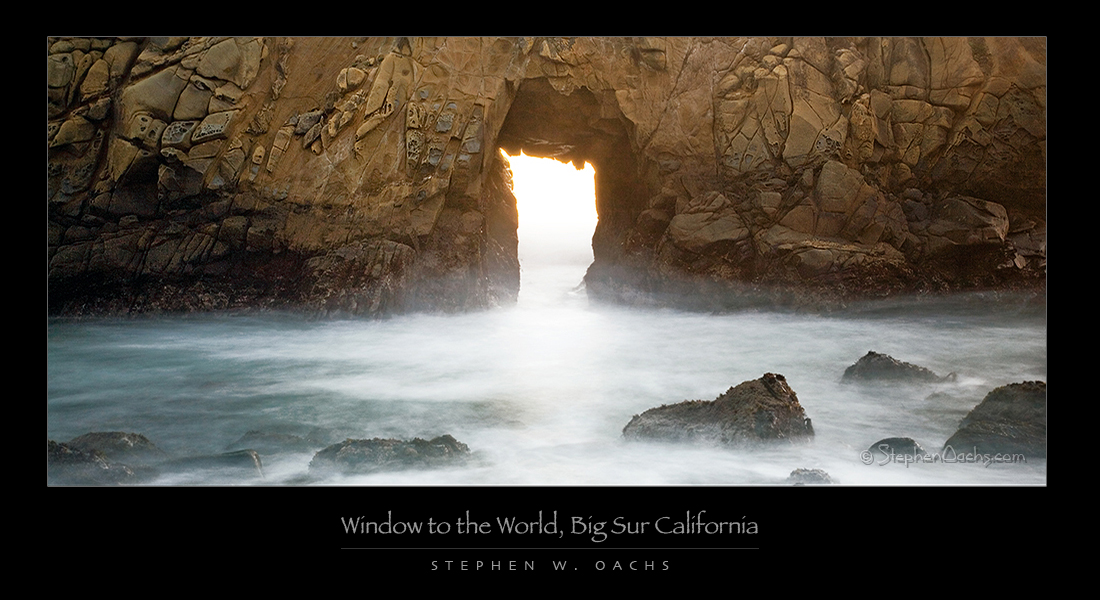
The next evening, I arrived at Pfeiffer Beach and went to a rock formation
known as, "The Window To The World." From the photo, you can see why it has
that name. Just as the sun was setting, it cast a glow inside the cave
opening. By using a 10-15 second shutter delay, I was able to capture the
flowing surf as it crashed through the opening and out onto the rocks before
me. I took many exposures timed to the surf, trying to get the best misty
effect.
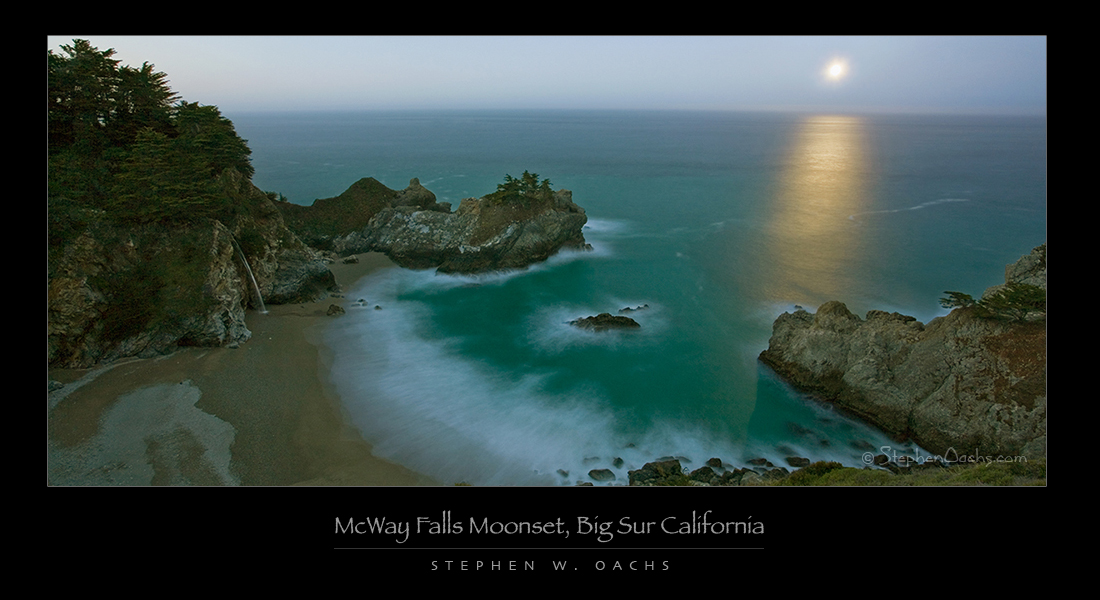
The next morning, at 3 am, I headed back to McWay Falls. I calculated, by
the moonrise schedule, that the moon would be far enough west to illuminate
the cove and, if conditions were right, I'd be able to capture the scene by
moon light. I was not disappointed! By 4:30 am the moon was in perfect
position and I took this picture. It was a challenge because (believe it or
not) it was still totally dark, with exception of the moon light, so I was
forced to focus manually. It took a 30-minute exposure to capture this
scene!
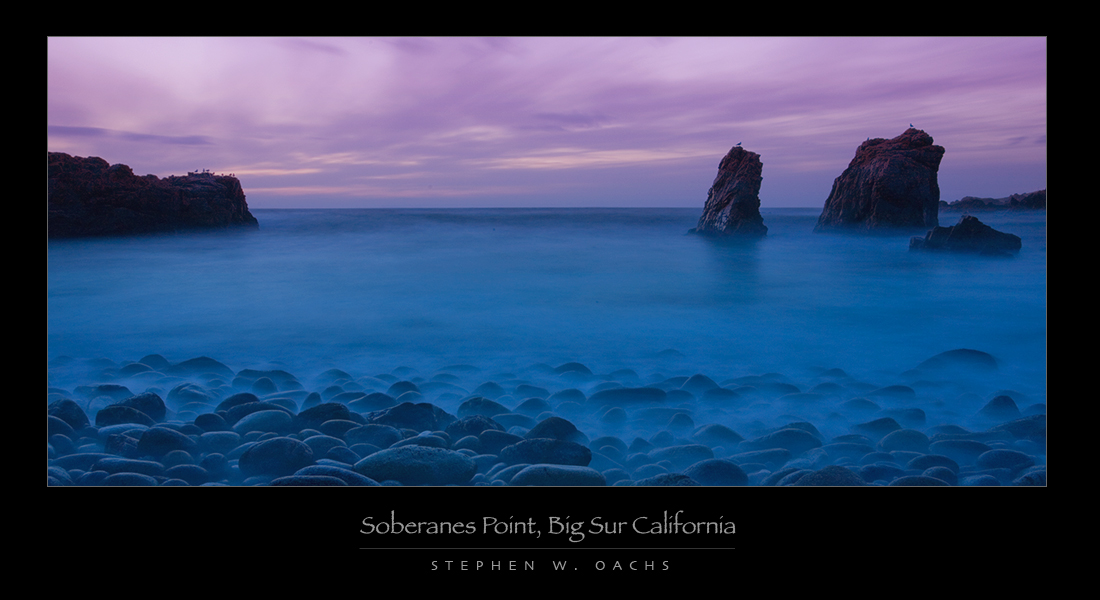
This shot was taken just after sunset at Soberanes Point. I used a 45 second bulb exposure at f/16 to soak up the
fading sunset light and to achieve the ghosting effect on the waves on the rocks.
|