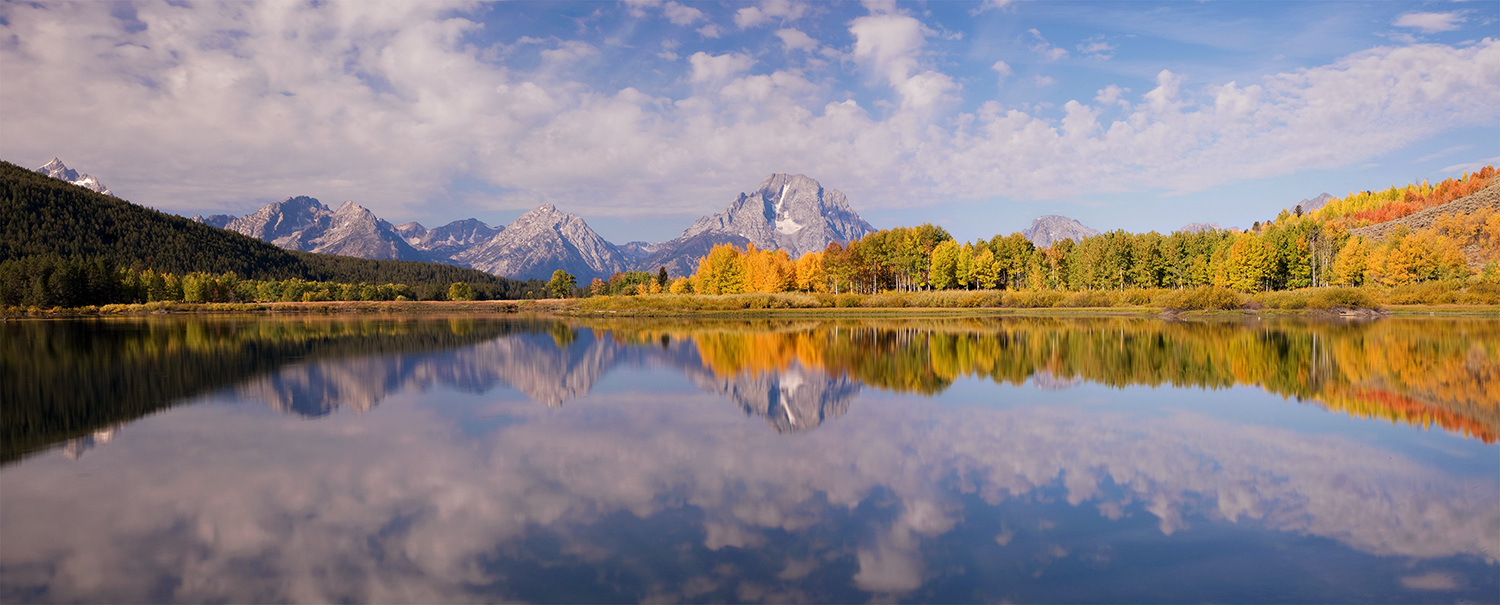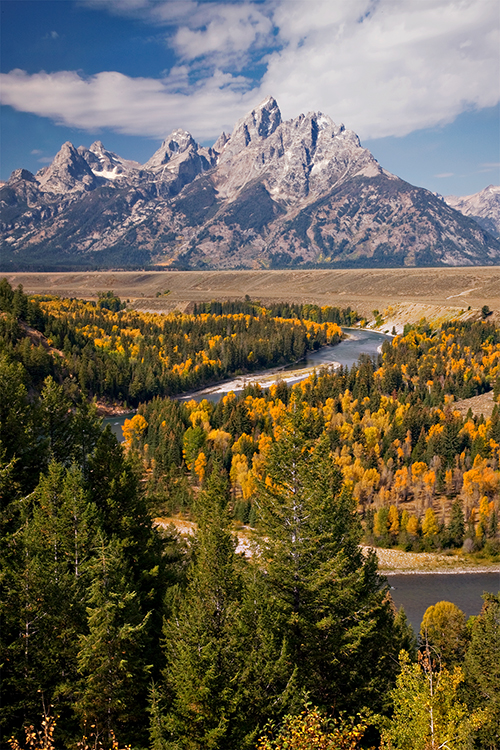
The Grand Teton mountain range rises abruptly and dramatically from the valley floor, with its highest peak reaching a staggering 13,770 feet. It's one of those places where
you can take dramatic landscape photographs as well as see a wide range of abundant wildlife; a place where once you arrive, you can easily lose track of the days and
the hustle of everyday life quickly becomes a distant thought. It really is one of the most amazing places on earth and we had the chance to spend four days exploring the entire area, hiking
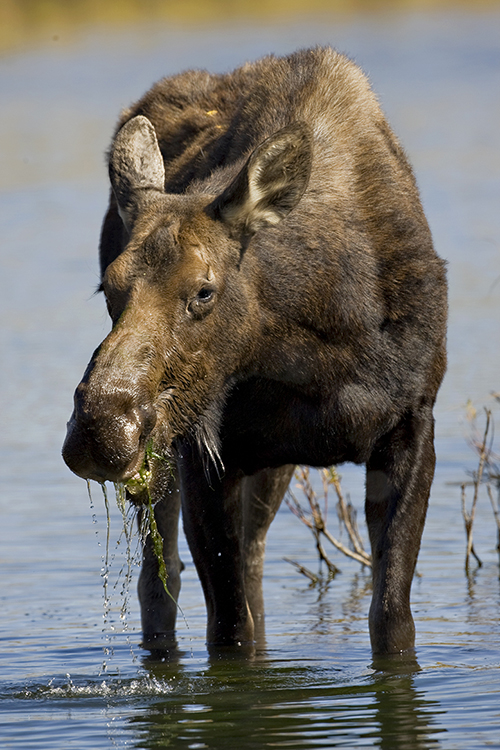
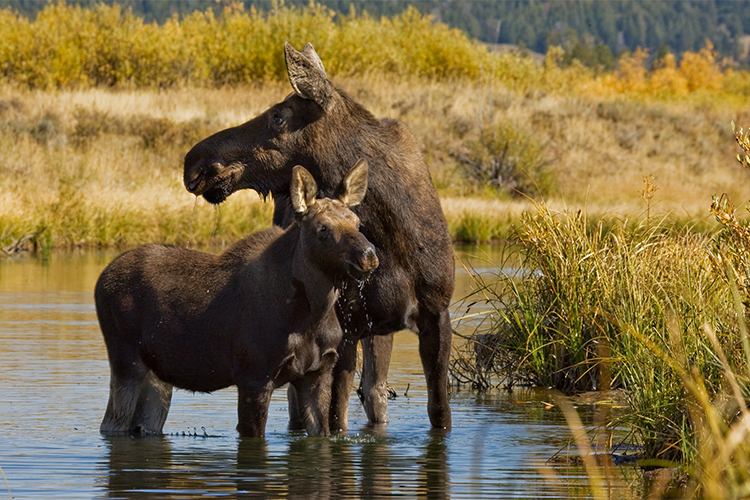
along the Snake River, photographing herds of elk, capturing a cow moose feeding with her young calf in a marsh, and photographing the majestic peaks of the Teton Range landscape.
 The Grand Teton National Park, tucked into the northwest corner of Teton County, Wyoming, was established February 29, 1929. The park has about 100 miles of paved road, 200 miles of hiking trails, and 310,000 acres of breathtaking wilderness. It is only a few miles south of Yellowstone National Park. This is our second photography trip to this magnificent park, and it won't be our last.
 Each day started at 5:15 am sharp, we were on the road by 6 am for an hour's drive north from Jackson Hole to the Oxbow Bend area, which is ideal for its sunrise landscape photography options. It is also a prime location to spot wildlife as they make their morning trek from the willow flats, across the Snake River and into the safety and cooler temperatures of the dense forest on Signal Mountain. Each day started at 5:15 am sharp, we were on the road by 6 am for an hour's drive north from Jackson Hole to the Oxbow Bend area, which is ideal for its sunrise landscape photography options. It is also a prime location to spot wildlife as they make their morning trek from the willow flats, across the Snake River and into the safety and cooler temperatures of the dense forest on Signal Mountain.
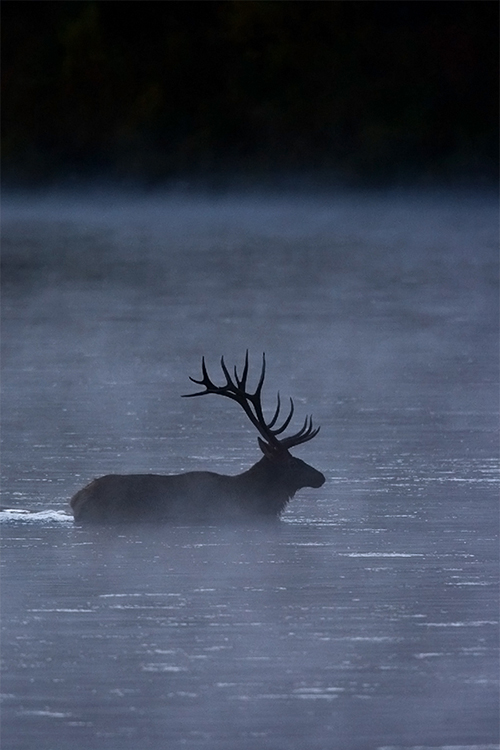
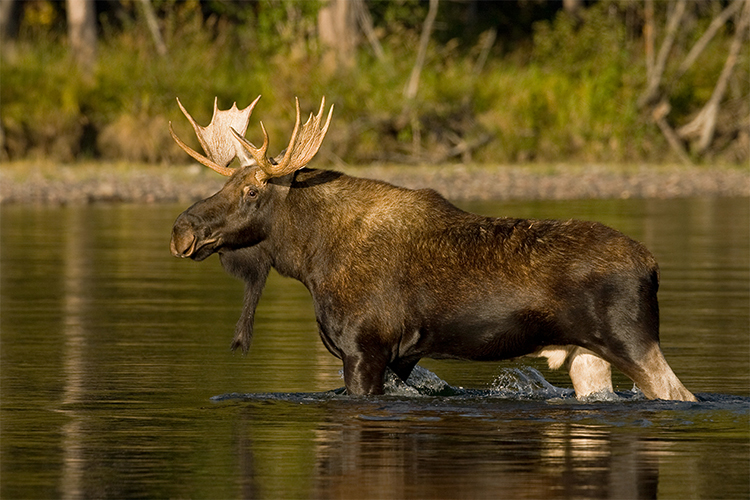
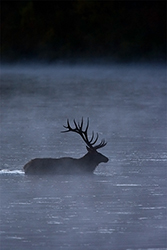
We spent every day hiking along the Snake River, watching and waiting for wildlife to emerge, which it often did. On the second morning, we witnessed a herd of elk cross the river just before sunrise and, while there wasn't much light, I took the shot anyway. Later that morning, a bull moose crossed the river just as the sun rose high enough to provide excellent light for capturing his grand detail. The resulting silhouette seems to really tell the story of his pursuit of survival.
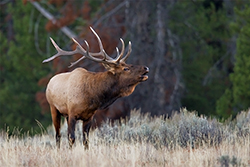
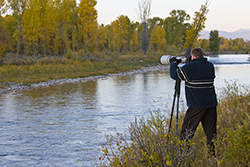 One of the best experiences of those cold early mornings was standing in the middle of the vast wilderness and hearing all around me the bugle calls of bull elk. Their sound is very unique and powerful, and sounds somewhat "Jurassic" in nature. Then, watching the females respond and gather together, moving from one area to another, was quite amazing. One of the best experiences of those cold early mornings was standing in the middle of the vast wilderness and hearing all around me the bugle calls of bull elk. Their sound is very unique and powerful, and sounds somewhat "Jurassic" in nature. Then, watching the females respond and gather together, moving from one area to another, was quite amazing.
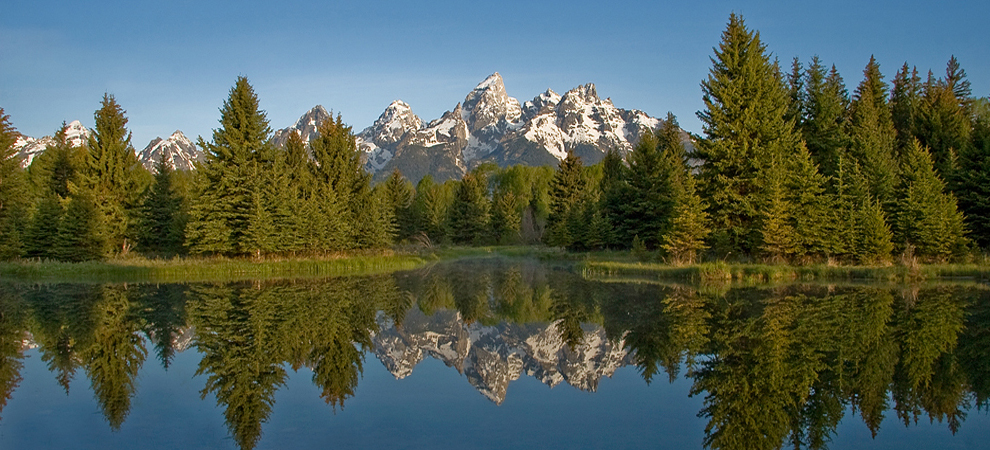
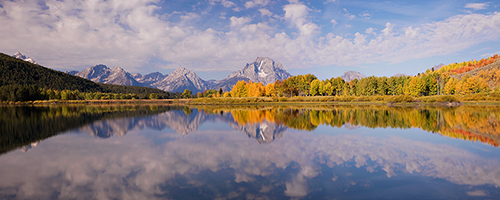
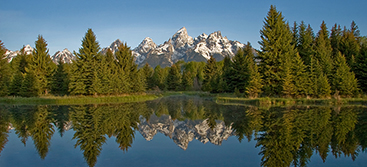 Even with all the wildlife to photograph, I couldn't pass up capturing some of the fantastic early fall colors in that incredible landscape. Schwabacher's Landing is one of those "Postcard Perfect" places to photograph. On a previous visit, two years ago, I decided I should capture my version of this highly photographed spot.
I scouted this location the night before to know exactly where "pole position" was for the best composition, and even though I arrived a good hour before
sunrise, I still wasn't first on location. However, the other two photographers chose different areas, so I scored the spot I wanted. Even with all the wildlife to photograph, I couldn't pass up capturing some of the fantastic early fall colors in that incredible landscape. Schwabacher's Landing is one of those "Postcard Perfect" places to photograph. On a previous visit, two years ago, I decided I should capture my version of this highly photographed spot.
I scouted this location the night before to know exactly where "pole position" was for the best composition, and even though I arrived a good hour before
sunrise, I still wasn't first on location. However, the other two photographers chose different areas, so I scored the spot I wanted.
We had a fantastic time on this trip, and I brought back many photos, a few of which could become some of my all-time favorites. A photograph can be so closely connected to an experience or memory that it takes on more meaning than merely an image. It becomes part of all those things in life that make us who we are, those unforgettable moments that contribute to the rich tapestry that colors our perception of life. I saw and experienced some amazing moments on this trip, and they have embedded themselves into my soul.
- Did you know this about Moose? The North American Moose, Alces alces, is the largest member of the deer family. The name, moose, is derived from the Algonquin word, moz, meaning "he trims, shaves." An average adult moose stands 6-7 feet tall at the shoulders. Males can weigh 1600+ pounds, whereas females only get to about 600-1000 pounds normally. The moose is the state animal of Maine and the state land mammal of Alaska.
- Did you know this about Elk? Also called Wapiti, Cervus canadensis, it is the second largest member of the deer family. Some cultures revere the elk as a spiritual force. Elk have a four-chambered stomach, and feed on grasses, plants, leaves and bark. The average adult male (bull) stands about 5 feet at the shoulders. They weigh around 700 pounds. Females (cows) stand around 4-1/2 feet high and weigh an average of about 500 pounds. Only the bulls have antlers, which shed each winter.
|